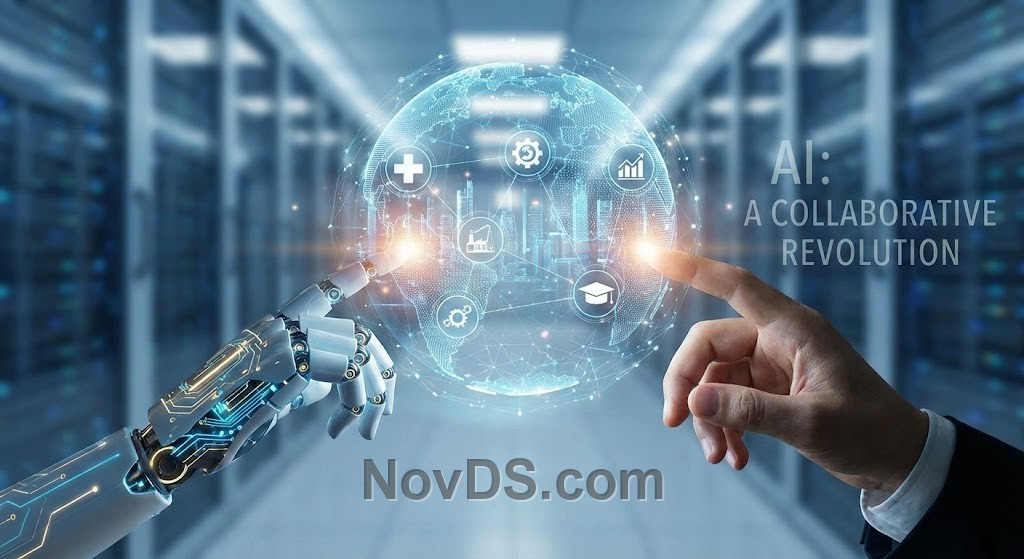
The world today is witnessing an unprecedented technological revolution, driven by the forces of Artificial Intelligence (AI), a driving force reshaping every aspect of our lives. From smart devices in our homes to complex systems managing major industries, AI is deeply embedded, heralding a new era of innovation and efficiency.
What is Artificial Intelligence?
Simply put, Artificial Intelligence is a branch of computer science that aims to develop machines capable of simulating human capabilities such as learning, reasoning, problem-solving, language understanding, and visual perception. It has evolved from mere theoretical concepts to practical applications thanks to tremendous advancements in processing power, the availability of big data, and the development of machine learning and deep learning algorithms.
Applications of Artificial Intelligence in Our Lives
The impact of AI is widespread and covers multiple sectors:
- Healthcare: AI helps in more accurate disease diagnosis, faster development of new drugs, and personalized treatment plans for patients. AI-powered systems can analyze medical images and detect tumors in early stages.
- Industry and Transportation: Smart robots in factories increase productivity and efficiency. Self-driving cars, relying on AI, promise to transform the concept of transportation and reduce accidents.
- Finance: AI is used in fraud detection, predictive market analysis, and providing personalized financial advice.
- Education: Personalized learning platforms that adapt to individual student needs, and tools for assessing student performance.
- Customer Service: Chatbots and virtual assistants provide instant 24/7 support.
Artificial Intelligence and its Ethical Challenges
Despite its immense promises, AI also poses significant challenges and ethical concerns. These concerns include issues such as:
- Bias: If the data used to train AI systems contains biases, these systems will replicate and amplify them.
- Privacy and Security: The collection and analysis of vast amounts of personal data raise questions about how to protect this information from unauthorized use.
- Job Displacement: There are legitimate concerns that AI-powered automation may lead to the displacement of certain jobs.
- Control and Accountability: With the increasing autonomy of AI systems, questions arise about who bears responsibility in the event of errors or harm.
The Future of Artificial Intelligence: Collaboration, Not Replacement
The future of AI is still being shaped, but it is clear that it will play a pivotal role in human development. Instead of replacing humans, AI is likely to serve as a powerful tool that enhances human capabilities, allowing us to focus on creative and strategic tasks. Harnessing its full potential requires careful consideration of ethical, legal, and social challenges, and the development of frameworks to ensure its responsible and equitable use.
Conclusion
Artificial Intelligence is not just a technology; it is a cultural, economic, and social revolution. It is redefining what is possible and pushing the boundaries of human innovation. As we move forward into this new era, our understanding of AI and our ability to guide it ethically will determine the path of the future we build together.