NOVds

Latest Articles

Stay up to date with the latest trends in technology.

Artificial Intelligence: A Revolution Reshaping the World

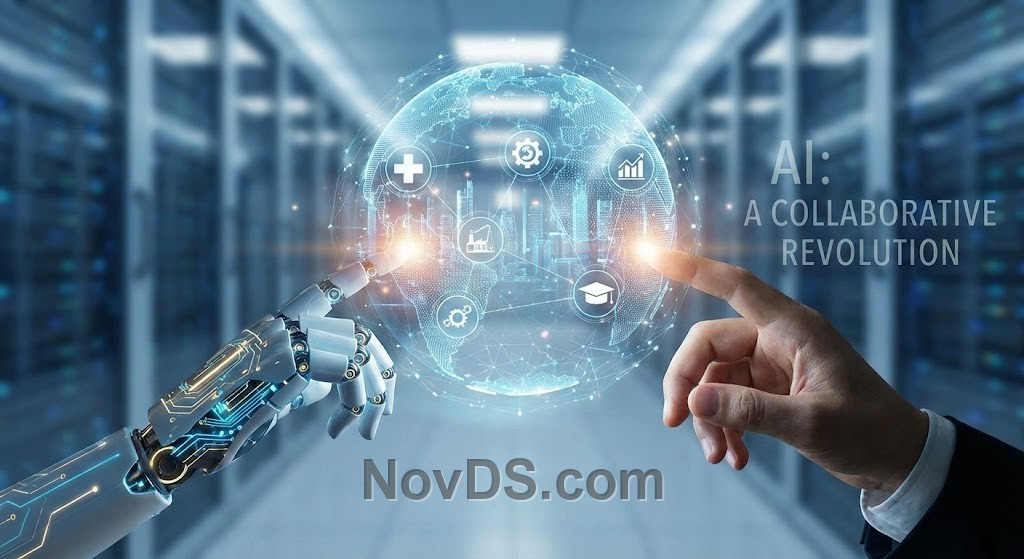
The world today is witnessing a radical transformation thanks to the Artificial Intelligence (AI) revolution, which is reshaping the core of our daily lives and major industries alike. AI, aiming to simulate human capabilities such as learning and problem-solving, is permeating every corner, from smart home devices to complex systems in healthcare, transportation, and finance. In healthcare, it contributes to early disease diagnosis and drug development, while in industry, it boosts productivity through smart robots and promises to transform the concept of transportation with self-driving cars. It also plays a crucial role in fraud detection in the financial sector and personalized education. However, this revolution is not without serious ethical challenges, such as issues of data bias, privacy and security concerns, and the potential for job displacement due to automation, in addition to matters of control and accountability. The future of AI lies not in replacing humans, but in enhancing their capabilities, which requires us to address these challenges responsibly to ensure its ethical and equitable use. It is not just a technology, but a cultural, economic, and social revolution that redefines the impossible and pushes the boundaries of human innovation towards new horizons.

February 12, 2026

The Importance of Artificial Intelligence and its Impact on the Future of Humanity

Artificial Intelligence (AI) represents a profound technological revolution reshaping the foundations of our societies and economies, carrying immense potential to radically change the future of humanity. AI is no longer confined to science fiction movies; it has become an integral part of our daily lives, from voice assistants in our phones to self-driving systems and advanced medical diagnostics. Its importance lies in its ability to process and analyze vast amounts of data with speed and accuracy far exceeding human capabilities, opening new horizons for innovation in multiple fields. In healthcare, it contributes to early disease diagnosis and the development of personalized treatments. In education, it offers customized learning experiences tailored to each student's needs. Economically, it boosts productivity and efficiency and improves decision-making processes in companies. Despite these benefits, AI poses significant challenges, most notably its impact on the job market through the automation of certain roles, necessitating the retraining of the workforce and the development of new skills. It also raises ethical issues related to privacy, cybersecurity, and algorithmic bias. To ensure a prosperous future, we must deal with AI responsibly, by establishing strict legal and ethical frameworks, investing in research and development, and fostering international cooperation to maximize its potential while mitigating its risks. It is a key to a smarter and more efficient future, but it requires our constant readiness to adapt and engage in continuous learning.

February 12, 2026